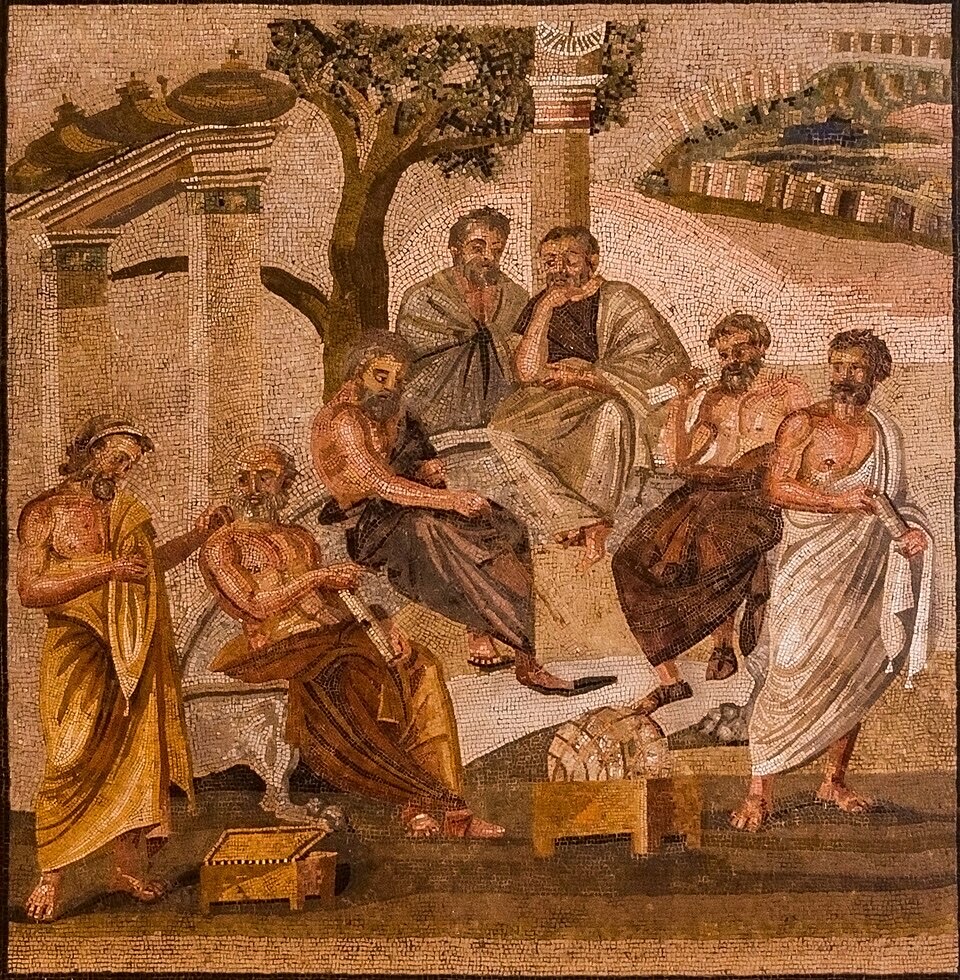
In the sun-drenched agora of ancient Athens, where philosophers wandered amid olive groves and marble columns, the concept of scholē first emerged like a gentle breeze on a summer afternoon. Derived from the Greek word σχολή, it originally signified leisure—not the idle lounging of the indolent, but a profound freedom from the necessities of labor.
For the Greeks, scholē was the sacred time carved out from the grind of daily survival, allowing the mind to roam freely in pursuit of wisdom and self-improvement. It was during the 5th century BC, amid the intellectual ferment of the Golden Age, that thinkers like Socrates began to embody this ideal, turning conversations in the marketplace into impromptu sessions of inquiry. Scholē wasn't merely rest; it was the fertile soil from which philosophy, art, and science could sprout, a testament to the belief that true human flourishing required space unbound by toil.
As the shadows of empire lengthened across the Mediterranean, scholē found a champion in Aristotle, the peripatetic sage of the 4th century BC. In his Nicomachean Ethics, he elevated leisure to the pinnacle of human existence, arguing that it was essential for contemplation and the virtuous life.
"We work in order to have leisure."
Aristotle
He proclaimed this, flipping the script on a world dominated by agrarian drudgery and warfare. For Aristotle, scholē was the realm where one could engage in theoria, the pure observation of the cosmos, untainted by practical concerns. This philosophy permeated the Lyceum, his school in Athens, where students gathered not for vocational training but for the joy of intellectual exploration. Yet, even in this enlightened era, scholē was a privilege of the elite—slaves and laborers bore the burden of ascholia, the lack of leisure, ensuring that only a few could bask in its light.
The torch of scholē passed to the Romans, who Latinized it as otium, weaving it into the fabric of their expansive republic and empire. Figures like Cicero, in the 1st century BC, extolled otium as a retreat from the negotium (business or work) of public life, a time for reading, writing, and reflection amid the villas of the countryside. Virgil's pastoral poems evoked this idyllic escape, where shepherds pondered life's mysteries under shady trees. However, as Rome's legions conquered vast territories, otium often clashed with the imperial demand for constant activity. In works like De Brevitate Vitae—On the Shortness of Life, Seneca argues that life feels short not because of its actual length, but due to how people squander it on negotium—chasing wealth, power, or fleeting pleasures. He insists that genuine leisure is essential for living fully:
"Of all people only those are at leisure who make time for philosophy, only those are really alive."
Seneca
By dedicating oneself to contemplation and study, one transcends the busyness of daily affairs and annexes the wisdom of past ages, making life feel expansive rather than truncated.
A recurring theme in Seneca's thought is the danger of empty otium. He famously warns that leisure without intellectual or moral purpose is destructive:
"Leisure without literature [or study] is death, and the burial of a living man."
Seneca
Idle rest, filled with trivial pursuits or vice, buries the soul alive; true otium invigorates it through reading, writing, and philosophical inquiry. Seneca contrasts this with the common Roman habit of filling retirement with superficial distractions, urging instead that otium be active in the mind—nourishing virtue and tranquility.
In his fragmentary dialogue De Otio (On Leisure), Seneca defends the choice of otium even for Stoics, who traditionally valued public service. He reconciles withdrawal with Stoic duty by arguing that the sage may retreat when public life becomes corrupt or impossible, turning inward to benefit humanity indirectly. Otium becomes a higher form of engagement: the philosopher in retirement serves the greater commonwealth (commune negotium) by cultivating wisdom that benefits others through example or teaching, rather than direct political action.
Emperors like Marcus Aurelius, in his Meditations penned during wartime campaigns, grappled with balancing stoic duty and personal leisure. Scholē, in its Roman guise, became a double-edged sword: a source of cultural refinement for the patricians, yet a symbol of decadence when abused, foreshadowing the empire's eventual decline.
Through the mists of the Middle Ages, scholē transformed under the cloak of Christianity, merging with monastic traditions and the rise of universities. In the 12th century, as cathedrals pierced the European skyline, scholars like Thomas Aquinas revived Aristotelian ideas, viewing leisure as a divine gift for studying scripture and theology. The word "school" itself evolved from scholē, denoting institutions like the University of Bologna or Paris, where learned men debated in Latin halls. Yet, this era's scholē was ascetic, intertwined with prayer and penance, a far cry from Greek hedonism. Monks in scriptoria copied ancient texts during their "leisure" hours, preserving knowledge through the Dark Ages. Amid feudal hierarchies, however, true scholē remained elusive for the peasantry, confined to fleeting festivals and holy days, while the clergy and nobility claimed it as their intellectual birthright.
As I write these words I cannot help but hum the words of Tevye in The Fiddler on the Roof:
"If I were rich, I'd have time that I lack / To sit in the synagogue and pray / And maybe have a seat by the eastern wall / And I'd discuss the holy books with the learned men / Seven hours every day / And that would be the sweetest thing of all."
Fiddler on the Roof
The Renaissance dawned in the 15th century, igniting scholē with humanistic fire that was spreading across Italy and beyond. Thinkers such as Erasmus and Petrarch championed a return to classical ideals, advocating for leisure devoted to the liberal arts—grammar, rhetoric, logic, and more. In Florence, the Medici family served as patrons of artists like Leonardo da Vinci, who embodied this spirit, using his free time to dissect cadavers, sketch flying machines, and paint masterpieces. Scholē became synonymous with the well-rounded individual, the uomo universale, who pursued knowledge for its own sake. Yet, as the printing press democratized learning, tensions arose: the Protestant Reformation, led by figures like Luther, critiqued monastic "idleness" while paradoxically emphasizing personal Bible study as a form of spiritual leisure. This period marked scholē's shift from elite enclave to a broader cultural aspiration, setting the stage for Enlightenment expansions.
Today, when burnout, anxiety, and mental health crises are epidemic, scholē offers a radical counter-cultural reminder that we work in order to have leisure, not the other way around. Without it, we risk becoming what Josef Pieper, a German Catholic philosopher, warned against in his mid-20th-century classic Leisure: The Basis of Culture: inhabitants of a "total work" society where everything, including our inner lives, is subordinated to utility and achievement.
In education, the revival of scholē, especially in classical Christian and homeschool circles, addresses a pressing modern problem: learning is saturated with stress, testing, and credentials rather than joy and depth. The etymology is telling—our word school derives from scholē—yet contemporary schooling often feels like the opposite: frantic preparation for economic success. Restful learning, with its emphasis on conversation, contemplation, and encountering truth, goodness, and beauty without pressure, helps students and teachers to rediscover education as the formation of the whole person, not just job training. In a time when young people face unprecedented academic and digital overload, scholē promises deeper comprehension, lifelong curiosity, and reduced anxiety.
On a broader cultural level, scholē counters the spiritual impoverishment of constant busyness. Pieper argued that true leisure involves celebration, openness to the transcendent, and even worship—elements eroded in a secular "achievement society." Reclaiming it means protecting space for silence, insight, non-activity, and genuine festivity, rather than frantic amusements or self-optimization.
Today, scholē whispers in quiet libraries, weekend hikes, and friends getting together to discuss books and themes over a cup of coffee. These aren't escapes; they're investments in what makes us fully human.
Anyone who has ever finished a captivating book only to realize, a month later, that even the simplest details have slipped away knows the quiet frustration of something essential being absent from the experience. Passive reading often leaves knowledge fragile and fleeting, like sand running through our fingers.
Scholē transforms this by demanding active engagement. It invites us into deliberate leisure—not idle time, but purposeful freedom—where we must discuss, question, and uncover the deeper truths embedded in what we've read. Through conversation and reflection, ideas move from surface-level acquaintance to genuine ownership, rooting themselves firmly in the mind and heart.
This is precisely why so many parents, especially in classical and Charlotte Mason-inspired approaches to homeschool, ask their children to narrate what they've read. Narration isn't mere regurgitation; it's an act of re-creation. By telling the story back in their own words, children wrestle with the concepts, reorganize the narrative, and make the book's truths their own. They actively process the elements that render a story truly good, beautiful, and meaningful—turning passive consumption into living knowledge that endures.
In this way, scholē and narration work go hand in hand: they provide the unhurried space and the active method needed for real understanding to take hold. What might otherwise fade into forgetfulness becomes integrated, forming the foundation for wisdom, virtue, and a deeper appreciation of life's richest ideas.