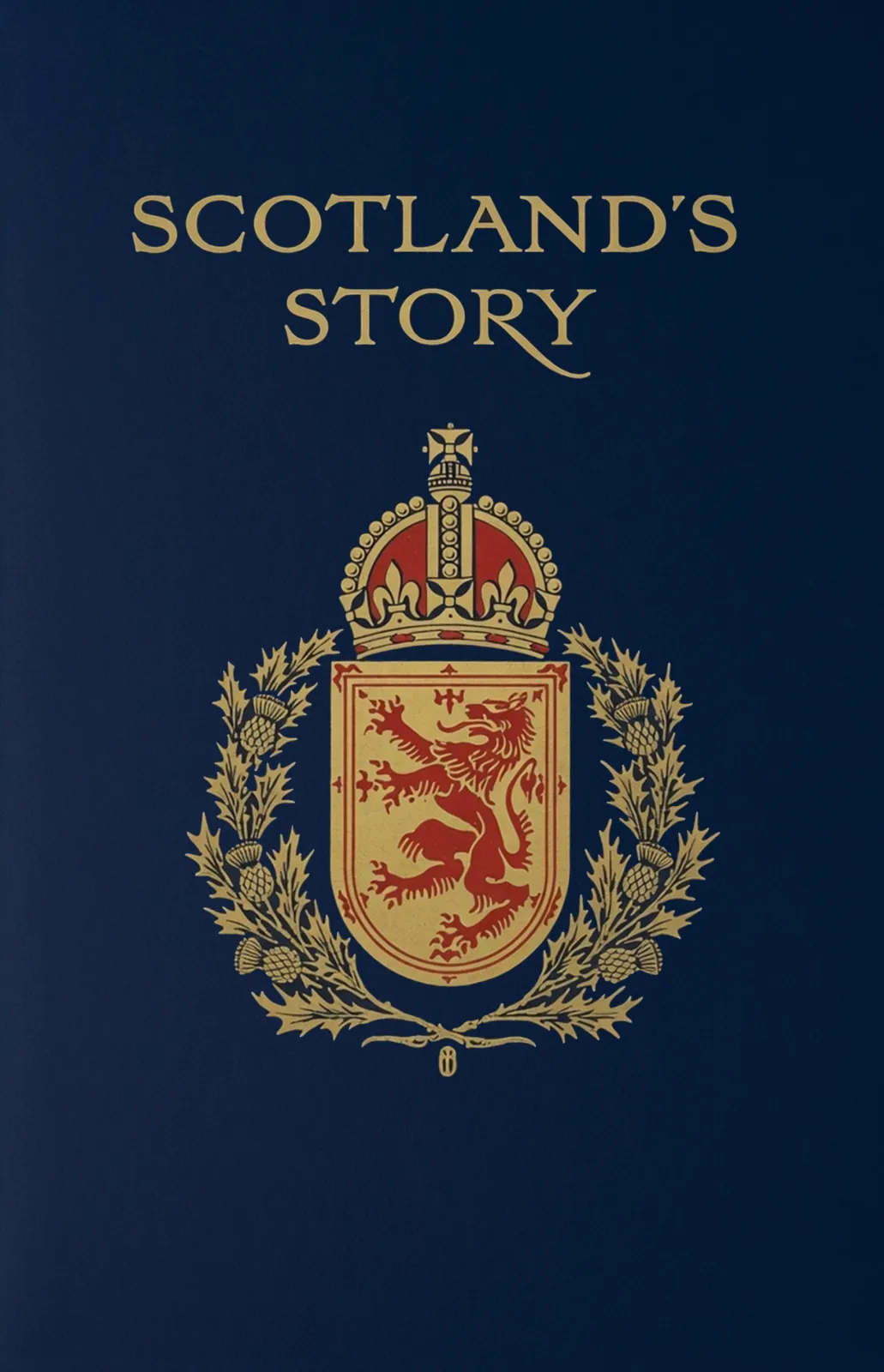
Cover of Scotland’s Story by Henrietta Elizabeth Marshall Coming Soon

Scotland’s Story

1906
Published
This title is in production and will be available to all active subscribers the day it is released.
Coming Soon Browse the Library

Scotland’s Story: A History of Scotland for Boys and Girls, first published in 1906 by Henrietta Elizabeth Marshall, is a classic children’s history that tells Scotland’s past in a lively, story-driven style. Beginning with the legendary tale of Prince Gathelus and moving through the Romans, Picts, and early Christian missionaries such as Saint Columba, the book carries readers forward in chronological order. It blends historical events with traditional legends, bringing to life familiar figures and episodes—including Macbeth, William Wallace, Robert the Bruce, Mary Queen of Scots, the Covenanters, and Bonnie Prince Charlie—while emphasizing battles, loyalty, and the long struggle to defend Scottish identity against English power.

Written in the vigorous, picturesque prose typical of Marshall’s other popular works, the narrative is aimed at young readers yet has long appealed to a wider audience. It ends in the reign of George IV, at which point Marshall declares that Scotland “has no more a story of her own—her story is Britain’s story,” reflecting the Union of the Crowns and Parliaments.

Henrietta Elizabeth Marshall, better known by her pen name H. E. Marshall, was a Scottish author born on August 9, 1867, in Bo'ness, West Lothian, Scotland. In her early adulthood, she briefly served as the superintendent at the University of Glasgow. After this period, she pursued a career as a full-time author, supporting herself through her publications in an era when few women did so. Marshall never married, maintained a very private life with no known interviews or personal diaries, and often used her initials to publish, possibly to conceal her gender in a male-dominated literary field. There are no known images of her likeness.

Marshall's most enduring contribution to children's literature came with the publication of Our Island Story: A Child's History of England in 1905. This engaging narrative traces Britain's history from legendary times—including myths like Brutus of Troy—through the Roman occupation, medieval eras, and up to the death of Queen Victoria. Written in a story-like style rather than dry facts, it aimed to captivate young readers by blending traditional history with mythology, making complex events accessible and memorable. The book became a beloved classic, known for its living book status, widely used in homeschooling and educational settings for generations, and helped establish Marshall as a leading author for families choosing a historical spine for their family studies.

Throughout her career, Marshall authored numerous other works, including This Country of Ours, Scotland's Story, Our Empires Story: Stories of India and the Greater Colonies, History of France, History of Germany, and The Story of Europe. Marshall also dove into children's adaptations of the classics with titles like Stories of Beowulf Told to Children, Stories of Roland Told to the Children, Stories of Robin Hood Told to the Children, and English Literature for Boys and Girls.

She traveled extensively after 1904, visiting places such as Melbourne, Australia, California, and China; though she spent much of her later life in southern England, particularly Oxford and London. Marshall passed away suddenly on September 19, 1941, at the age of 74. Her legacy endures through Our Island Story and similar titles, which continue to introduce young audiences to world history in an imaginative and narrative-driven way.