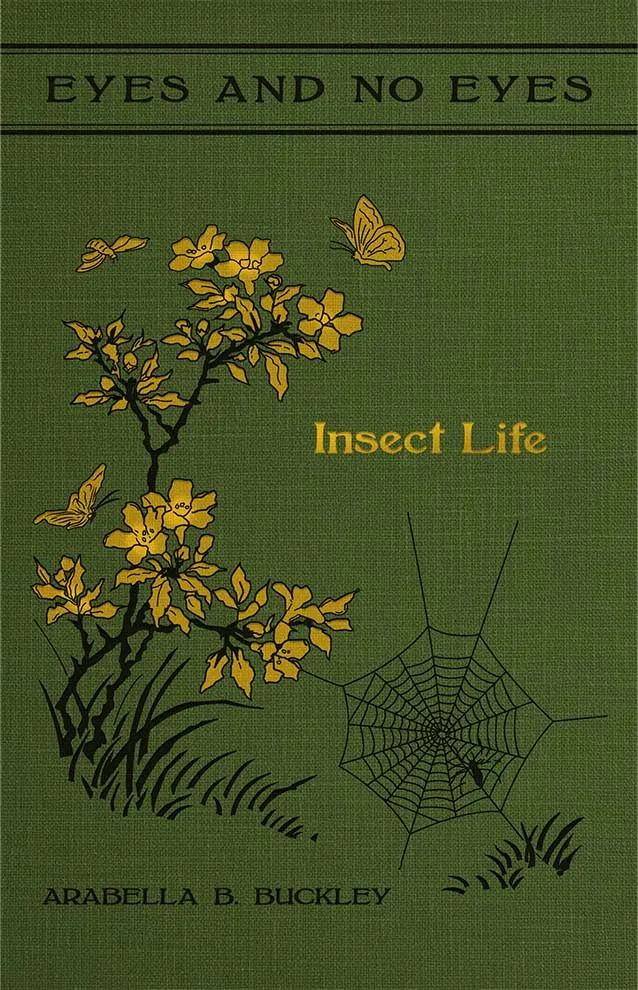
Insect Life
Insect Life, the sixth and final volume in Arabella Buckley's beloved Eyes and No Eyes series, concludes the children's exploration of the natural world with a focused look at the intriguing realm of insects. Buckley's warm, narrative approach encourages hands-on observation and careful study, turning everyday encounters with "creepy-crawlies" into exciting lessons that spark wonder about the tiny, often overlooked creatures buzzing, crawling, and flying around us.
The book covers a variety of common insects, including caterpillars and their metamorphosis into familiar moths and butterflies; beetles (both harmful and useful varieties); wasps and bees (solitary and social, with special attention to honeybees); flies; ants; and crickets and grasshoppers. Topics include insect body parts, life cycles (especially complete and incomplete metamorphosis), feeding habits, roles in nature (pollinators, predators, decomposers), and distinctions like what truly makes an insect versus other bugs.
- Introduction1:16
- Preface1:12
- What is an Insect?7:39
- Parts of a Caterpillar7:33
- Familiar Moths7:40
- Familiar Butterflies7:56
- Injurious Beetles8:37
- Useful Beetles7:43
- Wasps and Their Ways8:04
- Solitary Bees6:15
- Hive-Bees8:05
- The Two-Winged Flies8:27
- Crickets and Grasshoppers8:17
- Ants and Their Honey-Cows8:38
- Paideia Closing0:44
Chapter-by-chapter navigation, listening progress, and bookmarks are available in the member library.
Next in the Series
Wild Life in Woods and Fields
Wild Life in Woods and Fields was published in 1901 as the first volume in Buckley's Eyes and No Eyes series. It is a charming children's…
Audiobook · 1901
By Pond and River
By Pond and River released in 1901 as the second volume in Arabella Buckley's beloved Eyes and No Eyes series, continues the gentle,…
Audiobook · 1883
Home Education
Home Education is a foundational work of educational philosophy and practical guidance, originally delivered as lectures to parents and…