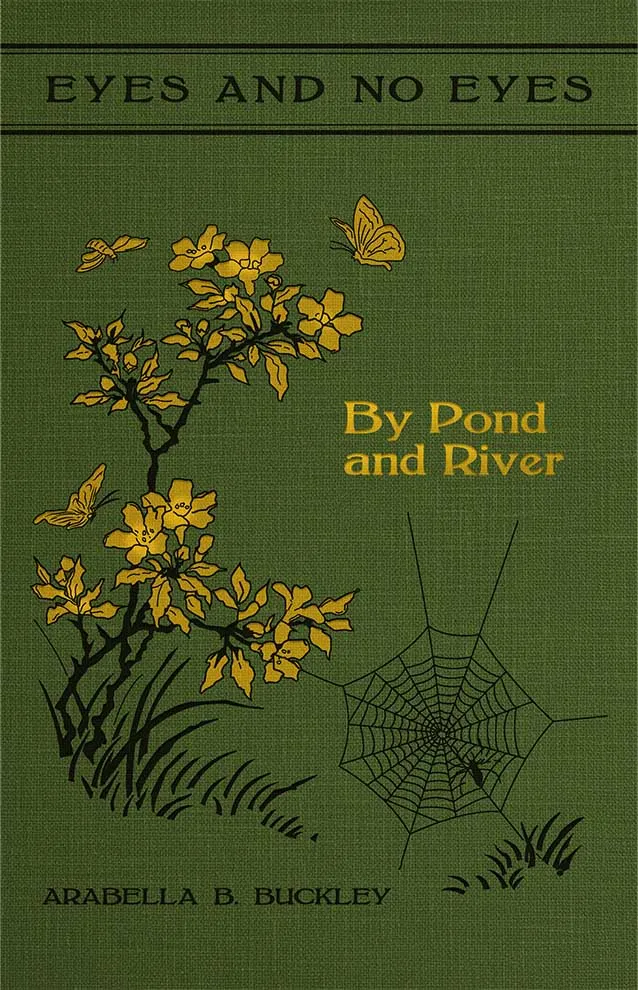
By Pond and River
By Pond and River released in 1901 as the second volume in Arabella Buckley's beloved Eyes and No Eyes series, continues the gentle, observational style of the first book. It follows the same three curious children—Peter, Peggy, and Paul—as they venture to nearby ponds and rivers, observing and learning about the vibrant life in and around freshwater environments throughout the seasons.
Through engaging narratives and simple life stories, Buckley awakens children's interest in aquatic and semi-aquatic creatures, encouraging them to explore nature with "eyes wide open" rather than just passing by without notice. The book covers a delightful range of topics, including amphibians like frogs; insects such as dragonflies and water-bugs; fish; water birds; mammals like otters and voles; and various plants that thrive in wet habitats. Buckley's warm, storytelling approach makes scientific facts accessible and entertaining, blending wonder with gentle lessons on adaptation, habitats, and the interconnectedness of pond and river ecosystems.
- Introduction1:24
- Preface1:13
- A Frog's Life4:09
- The Dragonfly and His Companionship4:08
- Down Below4:19
- The Stickleback's Nest3:56
- The Kingfisher4:15
- The Water-Rat, Or Water-Vole3:21
- The Water-Hen and the Coot4:42
- The Water-Bugs4:15
- Along the River4:37
- The Otter Family3:32
- Flowers for the Show4:15
- Peggy's Water-Plants4:54
- Paideia Closing0:44
Chapter-by-chapter navigation, listening progress, and bookmarks are available in the member library.
Next in the Series
Plant Life in Field and Garden
Plant Life in Field and Garden , the third volume in Arabella Buckley's Eyes and No Eyes series, continues the enchanting educational…
Audiobook · 1901
Insect Life
Insect Life , the sixth and final volume in Arabella Buckley's beloved Eyes and No Eyes series, concludes the children's exploration of the…
Audiobook · 1883
Home Education
Home Education is a foundational work of educational philosophy and practical guidance, originally delivered as lectures to parents and…