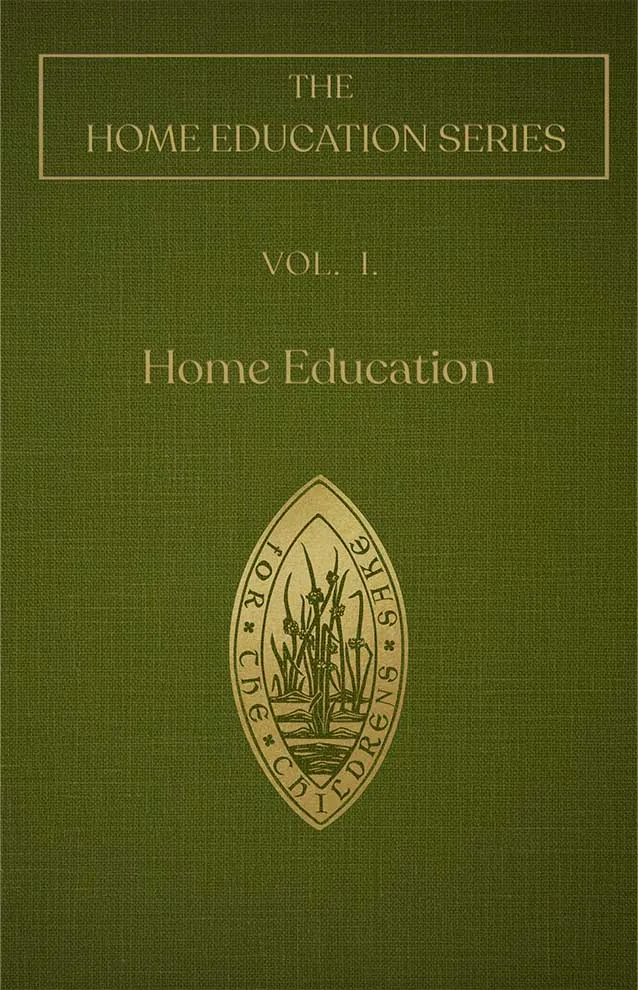
Home Education
Home Education is a foundational work of educational philosophy and practical guidance, originally delivered as lectures to parents and teachers. Aimed primarily at the education of children under age nine, it presents Mason’s vision of the child as a full person—spiritual, intellectual, and physical—whose mind is not a vessel to be filled but a garden to be cultivated with “living ideas.” Mason critiques overly mechanical or harsh traditional methods, advocating instead for an atmosphere of reverence and trust, the discipline of habit formation, and a life rich in real experiences rather than dry textbooks.
The book is structured around key principles: the importance of a loving home atmosphere; the training of good habits (attention, obedience, truthfulness, etc.) to lay a strong foundation for character; abundant time outdoors for nature study, observation, and physical health; short, focused lessons that respect a child’s natural attention span; narration as a powerful tool for comprehension and retention; and the use of high-quality “living books” that spark imagination and convey ideas directly from great minds. Mason emphasizes the development of the will, conscience, and spiritual life, urging parents to act as guides who foster curiosity, wonder, and moral growth rather than authoritarian drill-masters. Throughout, she blends profound philosophy with concrete examples, making it an inspiring and practical manual for gentle, holistic family-centered education.
"Education is an atmosphere, a discipline, a life."
Charlotte Mason · A Philosophy of Education
*If this is your first time reading Charlotte Mason, we would love to suggest that you order your reading starting at the end of her series with The Philosophy of Education, giving you a summary of her ideas and philosophies, then circling back for the more practical bits with volumes 1-4.
- Paideia Introduction1:35
- Preface to the ‘Home Education’ Series14:29
- Preface to the Fourth Edition3:52
- The Education of Children under Nine Years of Age2:15
- Part I — Some Preliminary Considerations1:18:05
- Part II — Out-of-Door Life for the Children1:42:43
- Part III — "Habit Is Ten Natures"1:15:32
- Part IV — Some Habits of Mind, Some Moral Habits1:06:53
- Part V — Lessons as Instruments of Education4:43:54
- Part VI — The Will, the Conscience, the Divine Life in the Child1:12:04
- Paideia Closing0:35
Chapter-by-chapter navigation, listening progress, and bookmarks are available in the member library.
Next in the Series
Parents and Children
Volume II turns from the schoolroom to the parents themselves — their authority, influence, and high calling as their children's first educators.
Audiobook · 1916
A Defence of Classical Education
R. W. Livingstone's spirited case for the classical tradition — a natural companion to Mason's vision of a generous education.
From Our Essays
Charlotte Mason: A Gentle, Timeless Philosophy
Who was Charlotte Mason, and why do so many families keep returning to her ideas? An introduction for the curious.