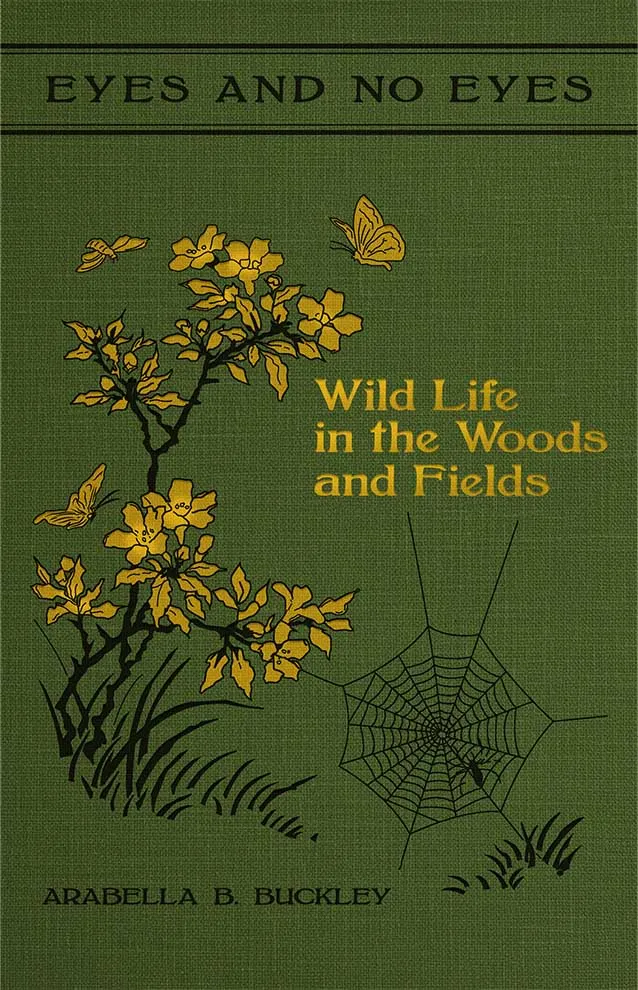
Wild Life in Woods and Fields
Wild Life in Woods and Fields was published in 1901 as the first volume in Buckley's Eyes and No Eyes series. It is a charming children's book that introduces young readers to the wonders of nature through simple, engaging observations. The book follows three children— named Peter, Peggy, and Paul—who explore the woods, fields, and surroundings near their home and school path, discovering a variety of wildlife and plants across the seasons.
Written in a delightful, narrative style, it encourages children to become keen "little naturalists" by paying close attention to the living world around them, blending gentle storytelling with factual natural history. The content explores a delightful variety of subjects, from woodpeckers, mice, moles, and cats to insects such as spiders, ants, and bees, along with plant life including spring flowers, nuts, and more. Buckley's approachable prose presents scientific concepts in an entertaining way, gently inspiring curiosity and careful observation without ever feeling like a formal lesson.
- Introduction1:22
- Preface1:09
- Spiders on the Common3:11
- The Woodpecker's Nest4:20
- Spring Flowers4:06
- A Family of Squirrels3:20
- The Skylark and her Enemy3:51
- Nuts and Nut-eaters3:44
- The Mouse and the Shrew4:03
- The Ant-hill3:30
- The Humble Bee's Nest3:42
- Peter's Cat4:12
- The Greedy Stranger4:33
- The Mole and His Home3:44
- Paideia Closing0:44
Chapter-by-chapter navigation, listening progress, and bookmarks are available in the member library.
Next in the Series
By Pond and River
By Pond and River released in 1901 as the second volume in Arabella Buckley's beloved Eyes and No Eyes series, continues the gentle,…
Audiobook · 1901
Plant Life in Field and Garden
Plant Life in Field and Garden , the third volume in Arabella Buckley's Eyes and No Eyes series, continues the enchanting educational…
Audiobook · 1901
Insect Life
Insect Life , the sixth and final volume in Arabella Buckley's beloved Eyes and No Eyes series, concludes the children's exploration of the…