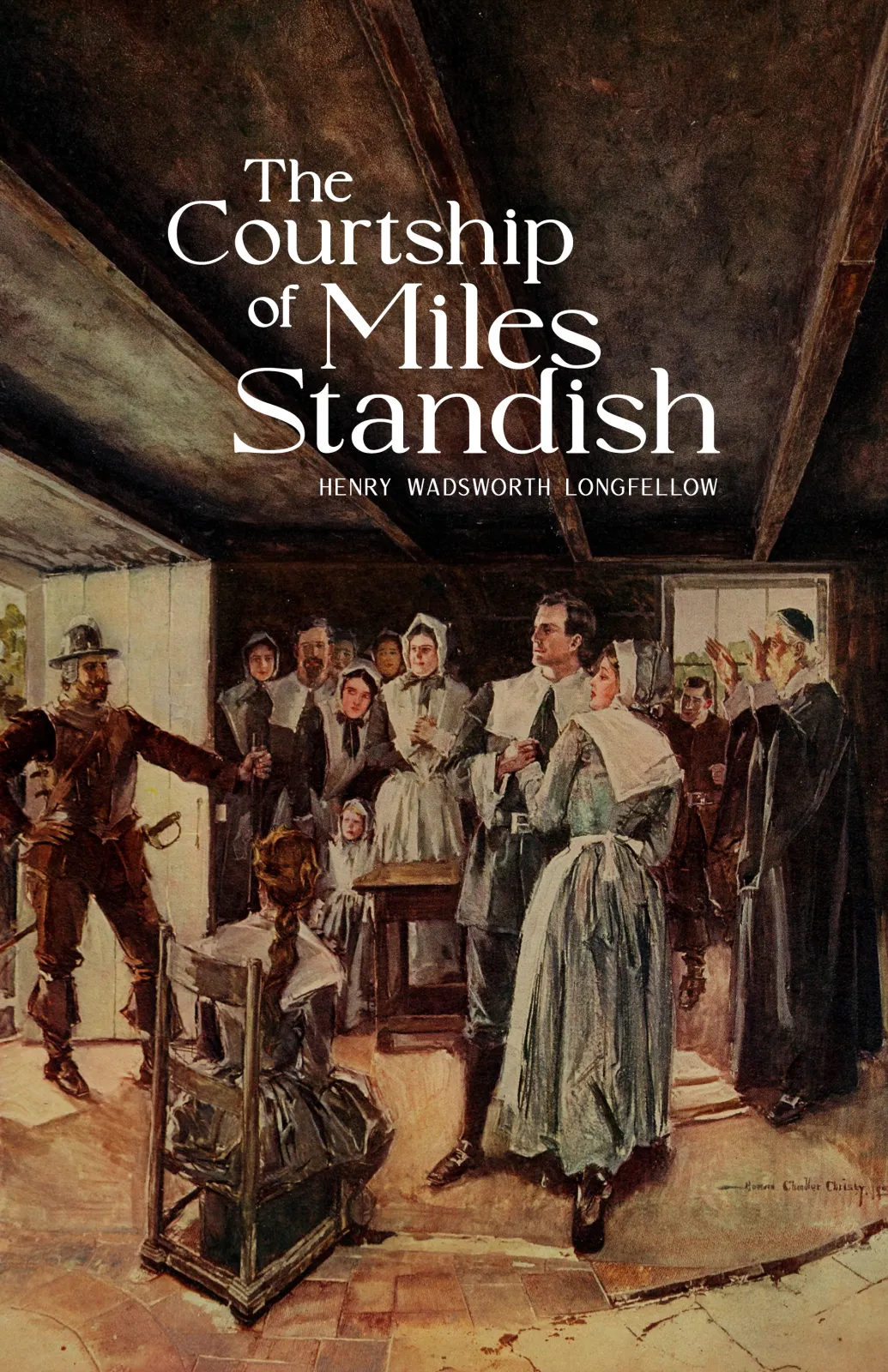
The Courtship of Miles Standish
Henry Wadsworth Longfellow’s narrative poem The Courtship of Miles Standish is set in the Plymouth Colony in 1621 and centers on a love triangle among three real Mayflower passengers. Captain Miles Standish, a blunt and aging soldier still mourning his wife Rose, decides to court the young Priscilla Mullins but, feeling awkward with words, asks his friend John Alden—a younger, more eloquent scholar—to propose on his behalf. Alden, who secretly loves Priscilla himself, reluctantly agrees out of loyalty. When he delivers the proposal, Priscilla rejects Standish and famously replies, “Why don’t you speak for yourself, John?” This places Alden in a painful conflict between friendship and love.
Standish, feeling betrayed, departs to lead the colony’s militia against Native American threats, winning a battle but later being reported dead from a poisoned arrow. Believing him gone, Alden and Priscilla marry. Standish then returns alive, reconciles with the couple, and wishes them happiness, allowing the story to end on a note of restored friendship amid the hardships of early colonial life. The poem, drawn partly from Longfellow’s family tradition (he was a descendant of John and Priscilla Alden), blends romance, duty, and frontier survival, though historians regard its central courtship details as largely legendary rather than strictly factual.

- Paideia Introduction2:18
- Miles Standish6:33
- Love and Friendship7:29
- The Lover's Errand11:11
- John Alden10:54
- The Sailing of the May Flower10:54
- Priscilla7:24
- The March of Miles Standish7:44
- The Spinning Wheel7:30
- The Wedding Day8:04
Chapter-by-chapter navigation and listening progress are available in the member library.
Audiobook · 1860
The Song of Hiawatha
The Song of Hiawatha is Henry Wadsworth Longfellow’s epic poem that draws on Native American legends—primarily Ojibwe traditions recorded…
Audiobook · 1901
Insect Life
Insect Life, the sixth and final volume in Arabella Buckley's beloved Eyes and No Eyes series, concludes the children's exploration of the…
Audiobook · 1910
Calvert of Maryland: A Story of Lord Baltimore's Colony
Calvert of Maryland: A Story of Lord Baltimore's Colony is a children's historical fiction narrated by young George Calvert (a fictional…