 Coming Soon
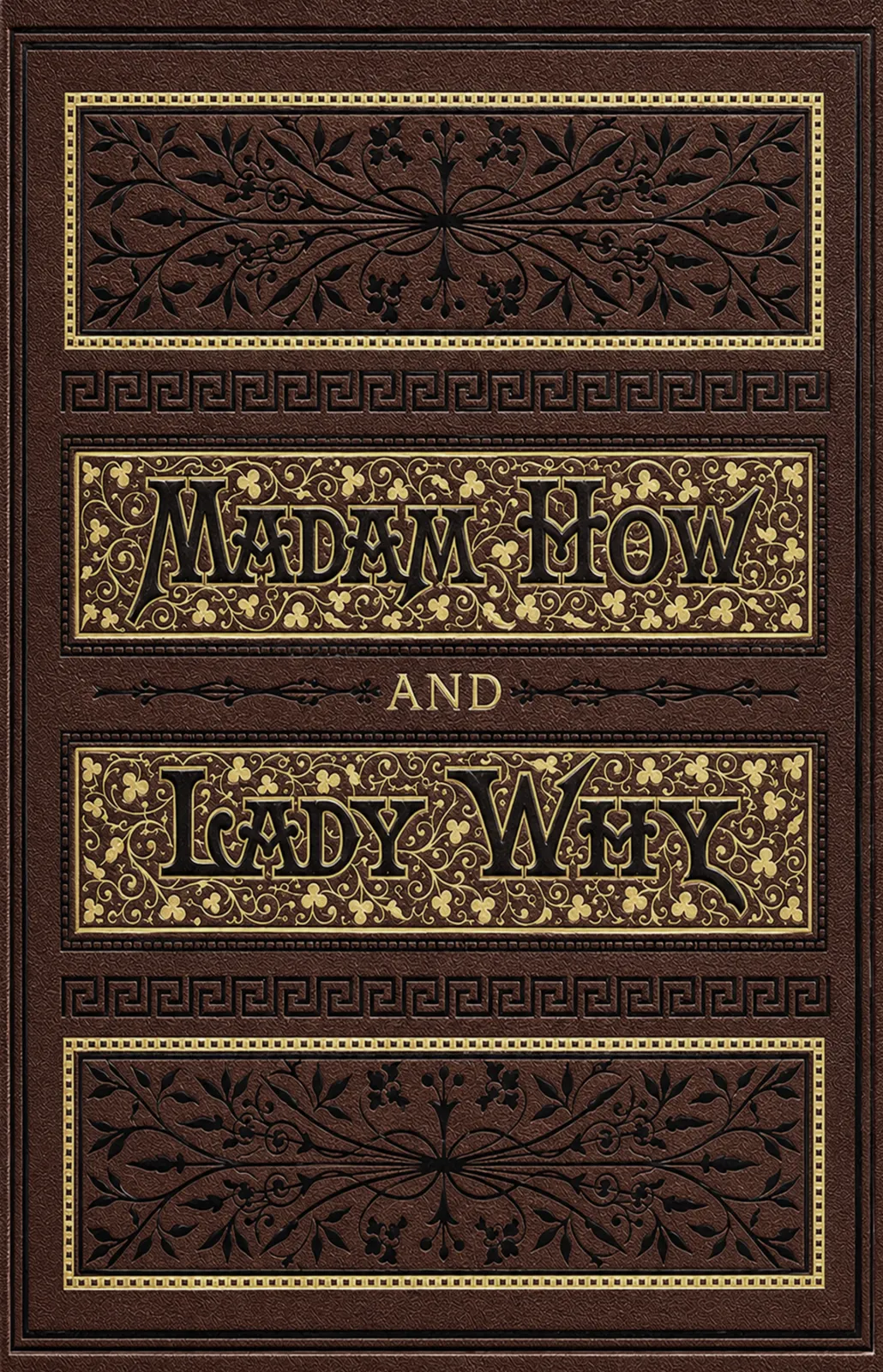
Madam How and Lady Why
Madam How and Lady Why; or, First Lessons in Earth Lore for Children is a children’s educational book by Charles Kingsley, written as a series of conversations between a father and his young son. Kingsley uses the personifications of two “fairies” to teach natural science, especially geology and the processes that shape the earth. Madam How represents the observable laws and workings of nature—the “how” of earthquakes, volcanoes, glaciers, soil formation, chalk, coral reefs, and other phenomena—while Lady Why stands for the deeper wisdom or purpose behind those processes (with an implied Master, understood as God, above her). The book stresses careful observation of the immediate world, the distinction between scientific mechanism and ultimate purpose, and the constant change that governs the earth’s surface.
The chapters move from local English landscapes to larger topics including earthquakes, volcanic activity, the work of ice, the origin of chalk and soil, coral reefs, and the contrast between cultivated fields and wild nature. A notable section introduces Madam How’s “two grandsons,” Analysis and Synthesis, representing science (taking things apart to understand them) and art (putting knowledge together creatively). Throughout, Kingsley encourages curiosity, the use of one’s own eyes and common sense rather than mere book-learning, and a view of nature’s forces as both powerful and ultimately orderly and purposeful.
Audiobook · 1901
Insect Life
Insect Life, the sixth and final volume in Arabella Buckley's beloved Eyes and No Eyes series, concludes the children's exploration of the…
Audiobook · 1910
Calvert of Maryland: A Story of Lord Baltimore's Colony
Calvert of Maryland: A Story of Lord Baltimore's Colony is a children's historical fiction narrated by young George Calvert (a fictional…
Audiobook · 1879
The Fairy-Land of Science
The Fairy-Land of Science is a delightful collection of lectures originally delivered to children, reimagining science as a realm of…