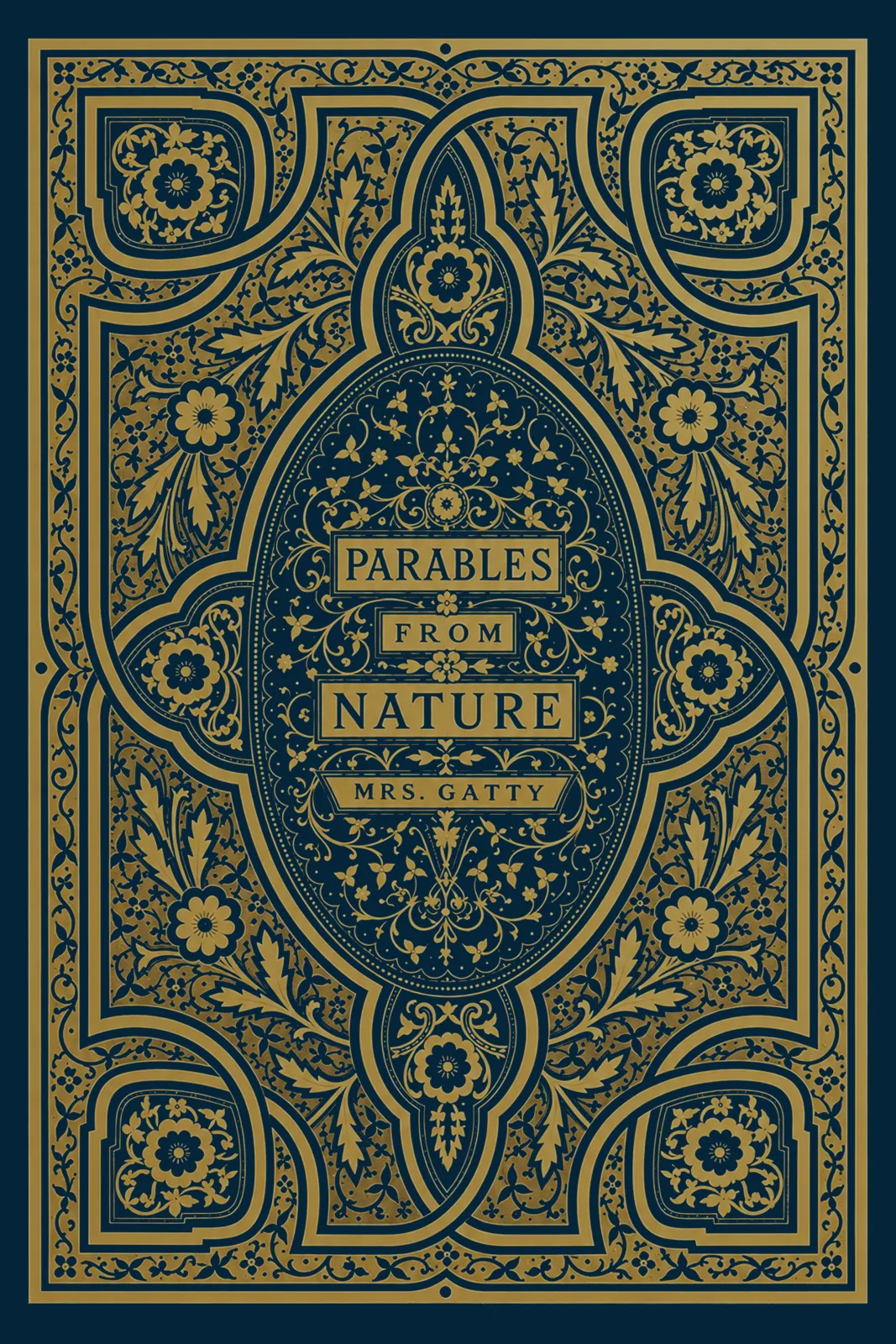
 Coming Soon
Parables from Nature
Parables from Nature (often referred to as Parables of Nature), by the British writer Margaret Gatty, is a collection of short allegorical stories originally published in four series between 1855 and 1869. Aimed primarily at children but appreciated by readers of all ages, the tales personify animals, insects, plants, and natural phenomena—such as bees, caterpillars and butterflies, birds, and seasonal changes—so they can converse and reveal scientific observations about the natural world. Drawing on the idea, quoted from Sir Thomas Browne, that nature is a “universal and public manuscript” through which God can be known, each parable uses these lively, anthropomorphic dialogues to illustrate moral and Christian lessons about faith, obedience, hope, patience, and divine order.
The stories, including well-known ones such as "A Lesson of Faith" (in which a caterpillar learns about metamorphosis and transformation) and “The Law of Authority and Obedience” (centered on the structured life of a beehive), blend accurate natural history with gentle spiritual reflection. Written in an engaging Victorian style that is both instructive and entertaining, the collection has endured as classic children’s literature and remains popular in modern educational settings, such as Charlotte Mason-inspired homeschool curricula, for its ability to connect everyday observations of nature with deeper truths about life, virtue, and providence.
Audiobook · 1909
The Faery Queen and Her Knights
The Faery Queen and Her Knights (also published as The Faery Queen for Boys and Girls), written by Alfred J. Church, is a prose retelling…
Audiobook · 1901
Insect Life
Insect Life, the sixth and final volume in Arabella Buckley's beloved Eyes and No Eyes series, concludes the children's exploration of the…
Audiobook · 1910
Calvert of Maryland: A Story of Lord Baltimore's Colony
Calvert of Maryland: A Story of Lord Baltimore's Colony is a children's historical fiction narrated by young George Calvert (a fictional…