 Coming Soon
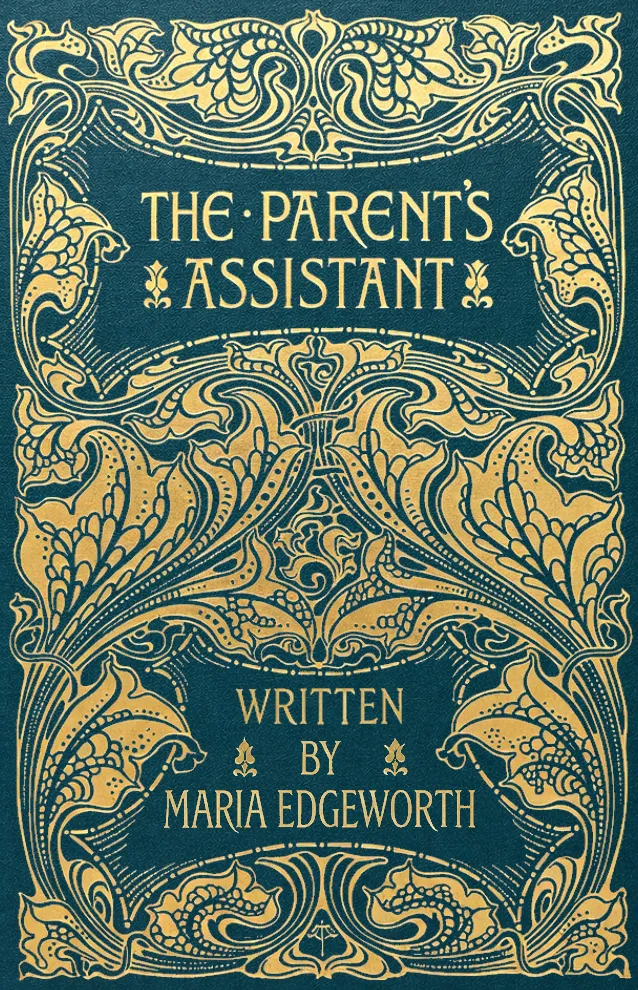
The Parent's Assistant
The Parent’s Assistant; or, Stories for Children is Maria Edgeworth’s pioneering collection of moral tales written to entertain and instruct young readers. Drawing on the practical educational ideas she developed with her father, Richard Lovell Edgeworth, the book presents everyday situations in which children face choices about honesty, industry, kindness, prudence, and self-control. Stories such as “Lazy Lawrence,” “The False Key,” “Simple Susan,” “The Orphans,” “The Purple Jar,” and “Waste Not, Want Not” show the natural consequences of good and bad decisions through realistic characters and clear, straightforward prose rather than fantasy or heavy moralizing. Later editions expanded the original set of tales and added material such as the children’s play Old Poz.
Edgeworth’s approach emphasizes rational thinking, the value of useful work, and the ability of children to act responsibly within family and community life. The stories avoid sensational adventure, focusing instead on domestic and social situations that parents and educators could discuss with children. The collection was widely read in the nineteenth century—Queen Victoria recalled reading it—and helped establish the model of didactic yet engaging children’s fiction that influenced later writers. It remains significant as an early, influential example of literature that treats children as capable of understanding moral and practical lessons drawn from ordinary life.
Audiobook · 1901
Insect Life
Insect Life, the sixth and final volume in Arabella Buckley's beloved Eyes and No Eyes series, concludes the children's exploration of the…
Audiobook · 1910
Calvert of Maryland: A Story of Lord Baltimore's Colony
Calvert of Maryland: A Story of Lord Baltimore's Colony is a children's historical fiction narrated by young George Calvert (a fictional…
Audiobook · 1879
The Fairy-Land of Science
The Fairy-Land of Science is a delightful collection of lectures originally delivered to children, reimagining science as a realm of…